The Neighborhood Reinvestment Initiative
The NRI is Atlanta's long-term, whole-of-government strategy for addressing decades of uneven development. It is not a single project, a single program, or a single funding source — it is a coordinated effort to invest in the conditions that shape opportunity every day.
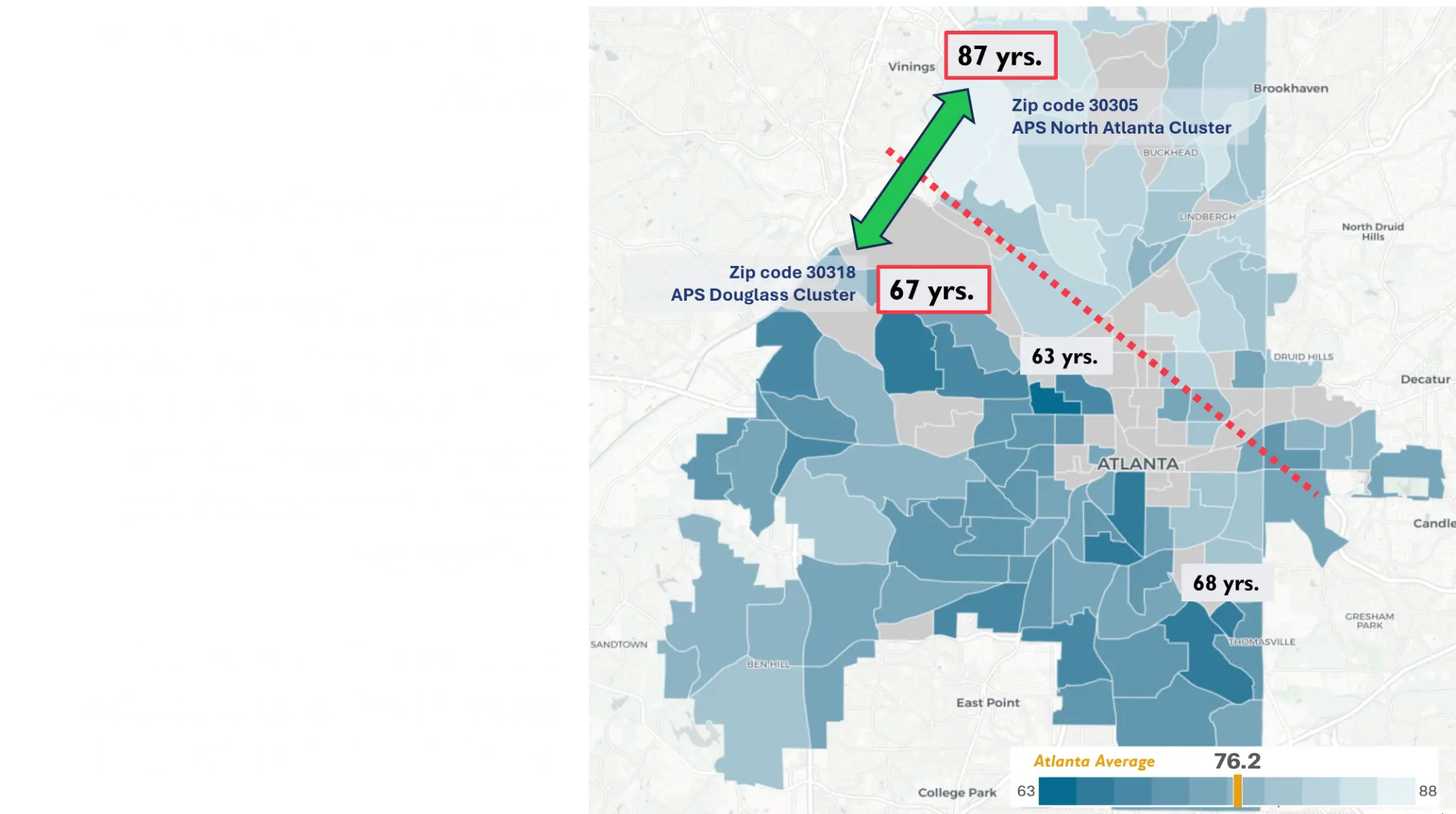
Where You Live Shouldn't Determine How Long You Live
In Atlanta, where you live is closely tied to how long you live.
Children born in NRI focus areas can expect to live up to 20 years less than those growing up just a few miles away.
This gap is not the result of individual choices. It reflects long-standing differences in access to housing, infrastructure, and opportunity, shaped over decades by where resources were directed and where they were not.
This is the context behind the Neighborhood Reinvestment Initiative, and why a more focused, sustained approach is needed.
Atlanta's response to this gap is the Neighborhood Reinvestment Initiative (NRI), a long-term strategy focused on directing resources to areas that have not seen consistent support.
Rather than addressing challenges in isolation, NRI brings together housing, infrastructure, economic development, and access to services in a more aligned and sustained way.
It is not a single project, but an ongoing effort intended to improve conditions in targeted areas while strengthening outcomes across the city as a whole.
The strategy and the funding are not the same thing
The NRI (strategy)
NRI defines where the city is focusing its efforts and what it is trying to achieve over time.
It sets priorities, guides decision-making, and ensures that work in targeted neighborhoods is sustained rather than one-time or disconnected.
Tax Allocation Districts (TADs)
TADs are one of the primary tools used to fund that work — not the strategy itself.
They allow the city to use future growth to support current investment, alongside other funding sources such as bonds, tax credits, and public-private financing.
What makes this approach different
Atlanta has used TADs before. The outcomes were not always consistent, and physical projects were not always accompanied by the programs needed for long-term stability. This round is built on four specific commitments.
Community Input
Communities are continuously engaged to shape what projects happen in their neighborhoods — not just consulted once at the beginning. Each of the seven focus neighborhoods has a local, nonprofit, place-based Neighborhood Partner Organization that works directly with the City to ensure project priorities reflect what residents actually need.
Comprehensive Strategy
TADs are embedded within a larger strategy for whole neighborhood health, not used as a standalone tool. Physical investments are paired with programs for housing stability, workforce development, and access to services.
Anti-Displacement Programs
A comprehensive suite of tools — tax relief funds, owner-occupied rehab grants, down payment assistance, and permanently affordable units — is layered into every TAD geography.
Built-in Accountability
Every TAD project must be approved by the Invest Atlanta board — including representatives from the City of Atlanta, Atlanta Public Schools, and Fulton County. All meetings are open to the public. The independent NRIC commission reviewed the full strategy before any Council vote.
Now that you know what the NRI is —
Learn how it's funded and why TAD extension is the most efficient path forward.